
6 Chapters Every Christian Should Know | Bible Trivia Quiz | Digging Deeper
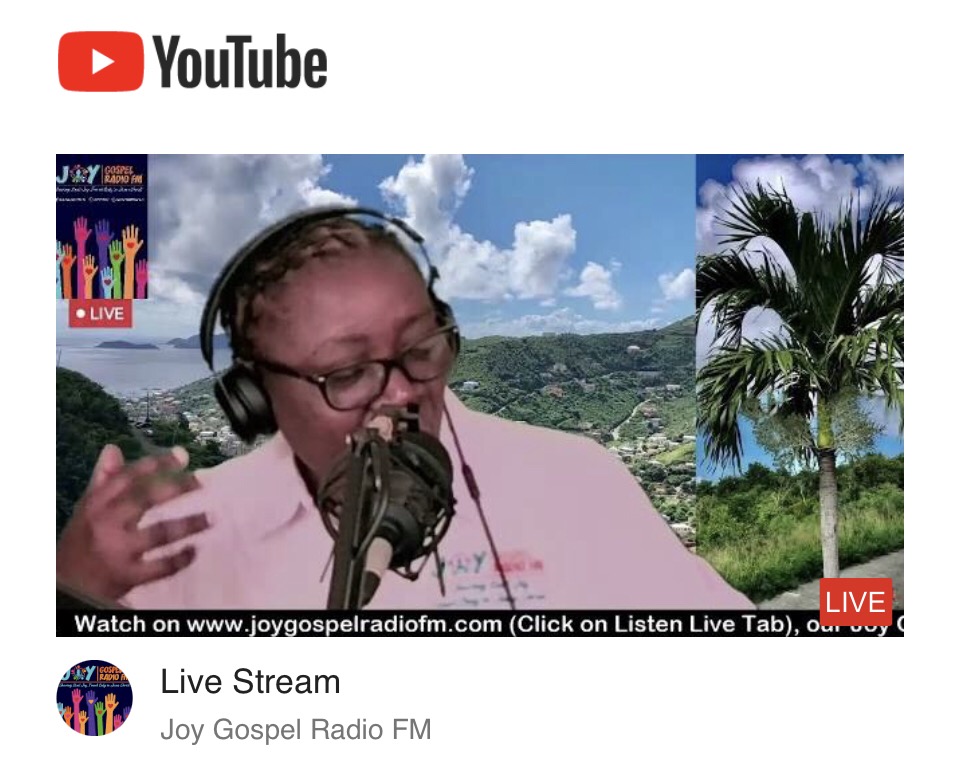
Question 1. The Hebrew word "Selah" appears throughout the Psalms and also three times in one other Old Testament book. Which chapter is it? (and which verses)
Answer: Habakkuk 3 — verses 3, 9, and 13.
Context & Exhortation: Habakkuk 3 is written like a psalm. It's labeled "A prayer of Habakkuk the prophet upon Shigionoth" (3:1), and it ends with a musical note, "to the chief singer on my stringed instruments" (3:19).
It was likely meant to be sung, not just read, which explains why this is the one place outside the Psalms where "Selah" shows up. The content is worth slowing down for, too.
In his first two chapters, Habakkuk wrestles honestly with God. He's troubled that God would use the cruel Babylonians to punish Judah. He basically argues with heaven about whether that's fair: "wherefore lookest thou upon them that deal treacherously, and holdest thy tongue when the wicked devoureth the man that is more righteous than he?" (1:13).
By chapter 3, that wrestling turns into one of the strongest statements of faith in the entire Old Testament. And it doesn't come after his circumstances got better. Nothing had changed yet. "Although the fig tree shall not blossom, neither shall fruit be in the vines… yet I will rejoice in the LORD, I will joy in the God of my salvation" (3:17–18).
This is a man who started the book arguing with God, and ends it worshiping Him, with his actual situation still unresolved.
The Babylonian invasion he feared was still coming. The "Selahs" in this final chapter mark the pauses along that hard road, from complaint to real worship.
Wherever our own "why" and "how long" questions to God are sitting right now, we are encouraged to follow Habakkuk's pattern. Bring the complaint honestly. And don't stop wrestling until it turns into real worship, even if nothing outward has changed yet.
Question 2. Which chapter of 1 Corinthians is often called the "resurrection chapter"?
Answer: 1 Corinthians 15.
Context & Exhortation: Paul opens this chapter by restating the gospel he'd already taught them. Christ died. He was buried. He rose on the third day. He appeared to Peter, to the Twelve, to over five hundred believers at once, many of them still alive when Paul wrote this, which was basically an invitation to go ask them yourself. He also appeared to James, and finally to Paul (15:3–8).
Then Paul makes a strong argument.
If Christ wasn't actually raised, "then is our preaching vain, and your faith is also vain… ye are yet in your sins… we are of all men most miserable" (15:14–19).
Paul isn't treating the resurrection as a nice symbol. He's staking the entire truth of Christianity on it being a real, historical event. Without it, he says plainly, the whole faith is worthless.
The chapter then describes what our future resurrection bodies will actually be like: "sown in corruption, raised in incorruption; sown in weakness, raised in power" (15:42–44). The chapter lands on its famous ending: "O death, where is thy sting? O grave, where is thy victory? … thanks be to God, which giveth us the victory through our Lord Jesus Christ" (15:55–57).
Paul wrote this chapter because the Corinthian church had started doubting or reinterpreting the resurrection. His answer wasn't to soften the claim. It was to double down on it as real history, with real consequences. Your hope, Paul says, either rests on an actual empty tomb, or it rests on nothing worth having.
Question 3. Which chapter of Romans is famous for declaring there is "no condemnation" for those who are in Christ?
Answer: Romans 8.
Context & Exhortation: "There is therefore now no condemnation to them which are in Christ Jesus" (8:1).
Many consider this chapter the high point of the whole New Testament. It helps to remember what comes right before it.
Romans 7 ends with Paul honestly describing his ongoing struggle against sin: "the good that I would I do not: but the evil which I would not, that I do" (7:19).
It builds to a desperate cry: "O wretched man that I am! who shall deliver me from the body of this death?" (7:24).
Romans 8 answers that cry. It doesn't pretend the struggle isn't real. The chapter moves from no condemnation (8:1), to life in the Spirit (8:9–11), to being adopted as God's own children who can cry "Abba, Father" (8:15), to the promise that "all things work together for good to them that love God" (8:28).
Romans chapter 8 ends with one of the strongest statements of security in all of Scripture: "who shall separate us from the love of Christ?… nor death, nor life, nor angels, nor principalities, nor powers… shall be able to separate us from the love of God, which is in Christ Jesus our Lord" (8:35–39).
Romans 8 wasn't written for people who'd already won their fight against sin. It was written for the exhausted, self-condemning person from chapter 7 — someone still failing, still fighting, desperate to hear that their standing with God doesn't depend on winning perfectly.
If Romans 7 feels closer to your life today than Romans 8's confidence does, remember: chapter 8 was written for exactly that person.
Question 4. Which chapter of Isaiah is known as the "suffering servant" passage, quoted extensively in the New Testament regarding Christ's crucifixion?
Answer: Isaiah 53.
Context & Exhortation: Isaiah wrote this roughly seven hundred years before the crucifixion.
He describes a man "despised and rejected of men; a man of sorrows, and acquainted with grief" (53:3). A man "wounded for our transgressions… bruised for our iniquities: the chastisement of our peace was upon him; and with his stripes we are healed" (53:5). A man who "was oppressed, and he was afflicted, yet he opened not his mouth: he is brought as a lamb to the slaughter" (53:7). A man who, though innocent, "made his grave with the wicked, and with the rich in his death; because he had done no violence, neither was any deceit in his mouth" (53:9).
New Testament writers return to this chapter again and again to explain the cross. Philip uses this exact passage to explain the gospel to the Ethiopian eunuch, who was reading it and asked, "of whom speaketh the prophet this? of himself, or of some other man?" (Acts 8:34).
Peter echoes its language directly: "who his own self bare our sins in his own body on the tree" (1 Peter 2:24).
Matthew connects Jesus's healing ministry back to this same chapter: "that it might be fulfilled which was spoken by Esaias the prophet, saying, Himself took our infirmities, and bare our sicknesses" (Matthew 8:17).
Centuries before crucifixion even existed as a method of execution, a prophet described — in vivid, specific detail — a silent, innocent man whose suffering would bring healing to others.
Family, we are challenged today to read Isaiah 53, slowly. Who else in history could this possibly be describing? The details point to one person — Jesus Christ, who would be born, live, and die roughly seven hundred years after Isaiah wrote these words.
Question 5. Which Psalm does Jesus quote from the cross, beginning "My God, my God, why hast thou forsaken me?"
Answer: Psalm 22, quoted by Jesus in Matthew 27:46 and Mark 15:34.
Context & Exhortation: It's worth reading past just the opening line.
Psalm 22 goes on to describe details that sound almost like an eyewitness account of a crucifixion, written roughly a thousand years before crucifixion existed as a punishment.
"I am poured out like water, and all my bones are out of joint… my strength is dried up like a potsherd; and my tongue cleaveth to my jaws… they pierced my hands and my feet… they part my garments among them, and cast lots upon my vesture" (22:14–18).
John's Gospel records Roman soldiers doing exactly this at the foot of the cross — dividing Jesus's garments, casting lots for His seamless coat (John 19:23–24).
When Jesus cries out the opening line of this psalm, He isn't just expressing raw despair on its own. For a Jewish audience who knew the Psalms well, quoting the first line of a psalm was a normal way of pointing to the whole psalm.
And Psalm 22 doesn't end in despair. By verse 24, it turns toward confident praise: "he hath not despised nor abhorred the affliction of the afflicted; neither hath he hid his face from him." By verse 31, it says "a people that shall be born" will hear "that he hath done this" — pointing ahead to a future generation shaped by this suffering.
Jesus's cry from the cross was the rawest expression of being forsaken. But for anyone who knew the psalm, it also pointed toward the vindication and worldwide praise that would follow. Even His most desperate words carried the seed of resurrection hope inside them.
Question 6. Which chapter contains the Beatitudes — the opening of Jesus's Sermon on the Mount?
Answer: Matthew 5. Luke 6:20–26 records a shorter, parallel version, sometimes called the Sermon on the Plain.
Context & Exhortation: "Blessed are the poor in spirit… Blessed are they that mourn… Blessed are the meek… Blessed are they which do hunger and thirst after righteousness…" (5:3–6).
Set against almost any culture's values, this list is upside-down. No one naturally thinks of poverty of spirit, grief, meekness, or persecution as "blessed." Our instincts run toward strength, comfort, and being well thought of.
Jesus opens His most famous sermon by saying the kingdom of heaven belongs, first, to exactly the people the world tends to overlook or pity. The spiritually empty, who know they have nothing to offer God. The grieving. The gentle. Those aching for justice they haven't seen yet. The merciful. The pure in heart. The peacemakers. Those persecuted for doing right (5:3–12).
This isn't just a list of nice traits to aim for. It describes a completely different value system than the one most of us live by: one where weakness before God, honest grief, and gentleness under pressure are the actual doorway into blessing, not obstacles to it.
The rest of the sermon, on anger, lust, oaths, revenge, and loving your enemies (5:21–48), keeps pushing the same point further. Real righteousness starts in the heart, not just in outward behavior.
As we come to the end of another session for today, let’s ask ourselves which beatitude feels furthest from our own instincts — the hardest one to actually believe is a blessing. That's probably exactly where Jesus is inviting us to trust Him most.
Click to watch: https://www.youtube.com/live/d6QiBF5JfcM?si=Bj8u5HdLs2eqnf8c
Comments