
Day 4 - How to Win the Battle of the Mind (Strongholds: The Thought Patterns That Won’t Let You Go)
- Angela U Burns
- Feb 19
- 5 min read
The word “stronghold” can sound intense, but biblically, it is not automatically negative.
In Scripture, a stronghold is a fortified place. It is a structure built for protection. David often called God his stronghold. Psalm 18:2 (KJV) says, “The Lord is my rock, and my fortress…” A fortress is a stronghold. That is a good one — a place of safety.
But there is another kind.
Second Corinthians 10:4 (KJV) speaks of “strongholds” that must be pulled down. These are fortified patterns of thinking that oppose the knowledge of God.
A stronghold in the mind is not just a random thought. It is a thought that has been reinforced so many times that it feels permanent.
Proverbs 23:7 (KJV) says, “For as he thinketh in his heart, so is he.”
Thankfully, that does not mean that if we think something, that’s who we are. It means thoughts shape identity.
So, if a person repeatedly thinks, “I am not good enough,” that thought eventually feels like the truth. If betrayal is constantly rehearsed, the mind can begin to anticipate it everywhere…from one person or environment to another.
And here is where spiritual warfare becomes personal.
Ephesians 6:11 (KJV) tells us to “put on the whole armour of God.” Notice that most of the armour protects the head and the core. The helmet of salvation guards the mind. The shield of faith blocks fiery darts, which are often thoughts, accusations, and fears.
Many people face spiritual warfare and are not aware, because many of us think spiritual warfare is always dramatic.
But truth be told, sometimes it is a quiet, persistent suggestion that contradicts what God has said.
Consider Saul, later called Paul. Before his conversion, he had a stronghold of religious certainty: a hardened confidence in his own righteousness. He genuinely believed he was serving God while persecuting believers.
This is backed by scripture - Philippians 3:4–6 (KJV) “Though I might also have confidence in the flesh. If any other man thinketh that he hath whereof he might trust in the flesh, I more: Circumcised the eighth day, of the stock of Israel, of the tribe of Benjamin, an Hebrew of the Hebrews; as touching the law, a Pharisee; Concerning zeal, persecuting the church; touching the righteousness which is in the law, blameless.”
It took an encounter with truth to dismantle that mental structure. When light exposed his error, his identity shifted. The battle was not only in his actions; it was in his understanding.
Now consider Asa, a king who began well.
In 2 Chronicles 16, when he faced opposition, instead of seeking the Lord as he had before, he relied on political alliances. The prophet Hanani told him, “For the eyes of the Lord run to and fro… to shew himself strong in the behalf of them whose heart is perfect toward him.”
Asa had developed a subtle stronghold of self-reliance. The shift was internal before it showed up externally.
Then there is Gideon. Many know him, but few focus on his internal dialogue.
In Judges 6, when the angel calls him “mighty man of valour,” Gideon responds with insecurity. His self-perception had been shaped by oppression. God had to dismantle the stronghold of inadequacy before Gideon could lead effectively. The battle was not just against Midian; it was against what Gideon believed about himself.
What I am understanding here Family, is that strongholds form quietly. A repeated fear. A repeated narrative. A repeated label. “I always fail.” “I’m not going to get it right.” “Nothing ever works for me.” “People always leave.”
How many of us have had these thoughts? I know I have.
Today, we are reminded that we need to challenge those thoughts, lest they become strongholds.
So, the question is: how do we release them? Speak to me, Holy Spirit.
First, we expose them to the truth.
Ephesians 6 speaks of the “sword of the Spirit, which is the word of God.” Truth cuts through deception. When a thought contradicts Scripture, it must be confronted.
When the thought says, “I always fail,” we answer it with Philippians 4:13 (KJV), “I can do all things through Christ which strengtheneth me.”
Instead of saying: “I’m not going to get it right.” Say: God is directing me. Romans 14:4 (NKJV) “Indeed, he will be made to stand, for God is able to make him stand.”
When the mind whispers, “Nothing ever works for me,” we stand on Romans 8:28 (KJV), “And we know that all things work together for good to them that love God.”
When fear says, “People always leave,” we remember Hebrews 13:5-6 (NKJV), ““Let your conduct be without covetousness; be content with such things as you have. For He Himself has said, “I will never leave you nor forsake you.” So we may boldly say: “The Lord is my helper; I will not fear. What can man do to me?””
This is how we release strongholds: by replacing repeated lies with repeated truth.
Secondly, we replace them consistently.
Romans 12:2 (KJV) says, “And be not conformed to this world: but be ye transformed by the renewing of your mind.” Strongholds lose power when they are no longer fed. Renewal is not just correcting one thought; it is establishing a new pattern.
When insecurity speaks, we answer with what God says. When fear predicts disaster, we respond with His promises. What we repeatedly rehearse determines what remains.
Third, remember now, we are answering the question: how do we release strongholds…We refuse agreement.
A thought can enter your mind without your permission, but it cannot stay without your agreement. That made me smile. I was like YESSS! SO TRUEEEE!
Family, pulling down strongholds begins with taking back agreement.
And here is the difference between good and bad strongholds. A bad stronghold traps you in false protection — fear, pride, bitterness. A good stronghold anchors you in God. Hallelujah.
Psalm 9:9 (KJV) says, “The Lord also will be a refuge for the oppressed, a refuge in times of trouble.”
Family, when God becomes our stronghold, other mental fortresses lose their grip. That simply means when we run to Him for security instead of running to fear, pride, or past pain, those false places of protection begin to weaken.
See, the more we trust His Word and His presence, the less control those old thought patterns have over our reactions and identity.
Let’s be clear, Family, the battle always begins in the mind. But so does freedom. Get that? We do not have to be fighting. We are already free in Christ Jesus.
Family, we cannot dismantle what we refuse to examine.
Let us ask the Lord today to reveal any strongholds that are not from Him. Bring it into the light. Confront it with truth. Replace it with His Word.
Because what has been built through repetition can be dismantled through revelation. Hallelujah.
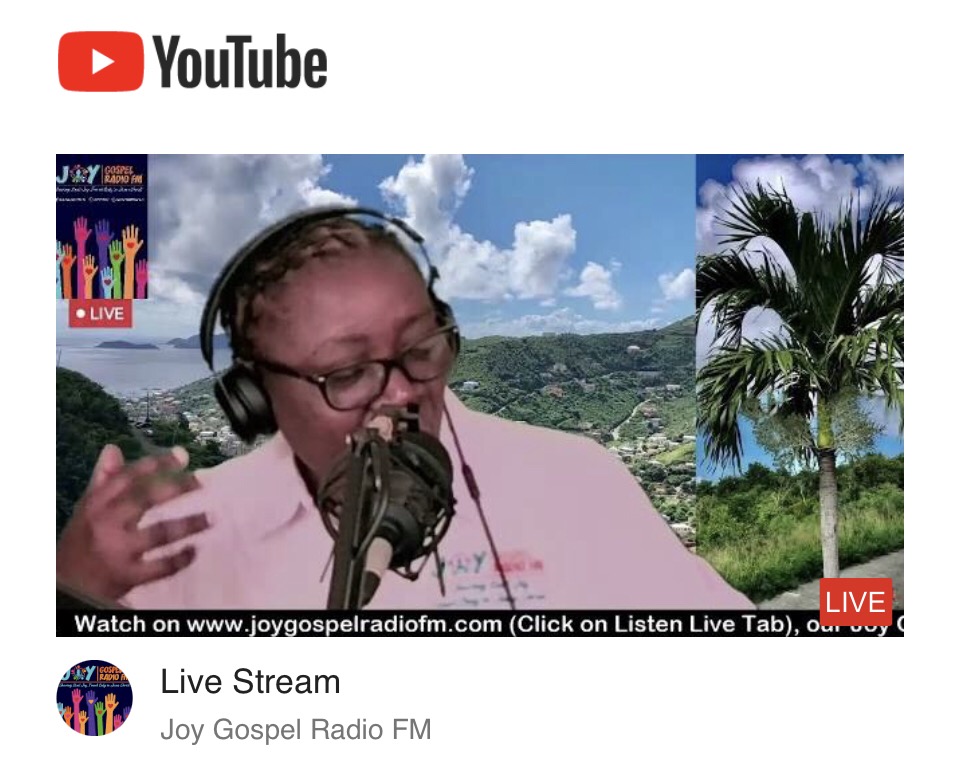
Click here for the full Live Empowerment Session: https://www.youtube.com/watch?v=qXgDB7afALI
Comments